Self drive Rwanda in 2026 is one of the best decisions any independent traveller can make. Rwanda is genuinely one of the easiest African countries to drive yourself — excellent roads, reliable navigation, a compact geography that puts gorillas, Big Five safaris, lake beaches, and ancient rainforests all within a few hours of Kigali. Whether you are a first-time Africa self-driver or an experienced overlander, this complete 2026 guide gives you everything you need to plan, prepare, and execute a successful self-drive trip in Rwanda.
Updated: June 2026 | Cars from: $40/day | Roads: Excellent tarmac | Drive on: Right-hand side | Safety: One of Africa’s safest countries
In This Guide
- Is self drive Rwanda right for you in 2026?
- What you need before you drive — documents and requirements
- The complete pre-departure checklist
- Rwanda road rules 2026 — what you must know
- Speed cameras — where they are and how to avoid fines
- Police checkpoints — exactly what to do
- Rwanda road conditions by region 2026
- Seasonal driving guide — dry season vs rainy season
- Best self drive routes in Rwanda 2026
- What to do if something goes wrong
- Frequently asked questions
1. Is Self Drive Rwanda Right for You in 2026?
Rwanda is one of the most accessible African countries for independent self-drive travel. Before committing, ask yourself these four honest questions:
Have you driven in right-hand traffic before? Rwanda drives on the right-hand side — same as France, USA, and continental Europe. If you have driven in the UK, Ireland, South Africa, Australia, or other left-side countries, this requires conscious adaptation particularly at roundabouts and junctions. Most drivers adjust within an hour.
Are you comfortable with GPS navigation? Google Maps works reliably across all of Rwanda’s main routes. Save your routes offline as backup. Rwanda’s road signage in English is generally good but not comprehensive in rural areas — navigation confidence is important.
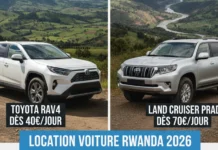
Does your itinerary involve national park tracks? Main highways in Rwanda are excellent tarmac. National park internal tracks are dirt, gravel, and laterite — the same as you find across East Africa. They are manageable in a 4×4 but require slower, more attentive driving than tarmac. If this is your first off-road driving experience, a Land Cruiser Prado is the right vehicle — not a RAV4.
Are you travelling in the rainy season? March–May and October–November bring rain that makes off-tarmac roads genuinely challenging. If your trip falls in these months, factor in extra time on park roads and budget for the Land Cruiser Prado rather than the RAV4.
If you answered yes to all four — self drive Rwanda in 2026 is absolutely right for you. If you answered no to some — read on, because most concerns are manageable with the right preparation and vehicle choice.
2. What You Need Before You Drive — Documents and Requirements
Your national driver’s licence Any valid national driver’s licence is legally accepted for self drive in Rwanda. There is no requirement to take a local test or obtain a Rwanda licence as a tourist. Your home country licence alone is legally sufficient.
International Driving Permit (IDP) An IDP is not legally mandatory but is strongly recommended. It is a certified translation of your licence recognised worldwide, and it significantly smooths police checkpoint interactions — particularly if your national licence is not in English or French. Apply for an IDP through your national automobile association before departure.
Minimum age 23 years old for most vehicles in our fleet. Some operators allow from 21 with a young driver surcharge.
Passport Carry your passport in the vehicle at all times. Police checkpoints routinely request it.
Rental agreement and vehicle documents Car Rentals Rwanda provides a complete document pack with every vehicle: rental agreement, vehicle registration, insurance certificate, and — for cross-border travel — the COMESA Yellow Card and authorisation letter. Keep all documents in the vehicle.
3. The Complete Pre-Departure Checklist
Complete this checklist before leaving Kigali on any self drive trip in 2026:
Documents
- National driver’s licence — in the car
- International Driving Permit — in the car
- Passport — in the car
- Car Rentals Rwanda rental agreement — in the car
- Vehicle registration document — in the car
- Insurance certificate — in the car
- Car Rentals Rwanda emergency number saved: +250 788 552 939
- Google Maps route saved offline for your destination
Vehicle checks
- Full fuel tank — never leave Kigali less than full
- Spare tyre — check it is inflated and accessible
- Jack and wheel brace — confirm present under boot floor
- Basic toolkit — confirm present
- All lights working — indicators, headlights, brake lights
- Windscreen wipers working — essential for rainy season
- Engine oil and coolant levels — check dipstick
Supplies
- Drinking water — minimum 2 litres per person
- Cash in USD — for park entry fees, checkpoints, emergencies
- Phone fully charged + car charger
- Portable power bank (optional but recommended for longer trips)
- Basic first aid kit
- Sunscreen and insect repellent for national park visits
Before national park visits specifically
- Fuel tank completely full — no fuel inside any Rwanda national park
- Gorilla permit confirmation printed or downloaded — if applicable
- Park entry cash ready — USD preferred at gates
- Spare tyre confirmed inflated — no repair services inside parks
- Departure time set — park gates open 6:00am, close 6:00pm
4. Rwanda Road Rules 2026 — What You Must Know
Drive on the RIGHT
Rwanda drives on the right-hand side. This is the single most important rule. Adjust your instincts at every junction, roundabout, and road join. The highest-risk moments are: pulling out of a parking space, joining a road from a side street, and navigating roundabouts. At roundabouts, give way to traffic already inside the roundabout.
Speed limits — strictly enforced
| Road type | Speed limit |
|---|---|
| Residential streets and school zones | 30–40 km/h |
| Town and city roads | 40–60 km/h |
| National highways | 80 km/h |
| Inside national parks | 40 km/h |
Speed limits in Rwanda are not suggestions. They are actively enforced by fixed speed cameras and occasional police radar. Fines are issued to the vehicle registration — which means they come to Car Rentals Rwanda and then to you. Our team briefs every customer on current camera locations before departure.
Seatbelts — mandatory for everyone
Every passenger in every seat must wear a seatbelt at all times. Police checkpoints specifically check rear passenger seatbelts.
Mobile phones — hands-free only
Using a handheld phone while driving is illegal and actively policed. Use a phone mount and speaker, or Bluetooth. Rwanda police take this seriously.
Alcohol — zero tolerance
Rwanda enforces a zero-tolerance alcohol policy for driving. Do not drive after consuming any alcohol. Police checkpoints include breathalyser tests.
Headlights
Use headlights from dusk to dawn. Daytime running lights are not a substitute — in Rwanda you need full headlights after sunset.
Overtaking
Overtake on the left only. Never overtake on a bend, hill crest, or near a junction. Rwanda’s hilly roads make blind bends common — patience is essential.
5. Speed Cameras — Where They Are and How to Avoid Fines
Rwanda’s speed cameras are fixed, digital, and actively monitored. They are not placed to surprise you — they are placed at consistent locations. Here is what you need to know:
How they work Fixed cameras photograph the vehicle and record its speed. The fine is issued to the vehicle registration — typically within days. Car Rentals Rwanda will forward any fines to the responsible driver.
Common camera locations include:
- Multiple points on the Kigali–Musanze (NR1) highway
- Kigali city entry and exit points
- Through-town sections on all national highways
- Near schools and market areas
How to avoid fines:
- Set your phone’s speed warning at 75 km/h on highways — this gives you a comfortable buffer below the 80 km/h limit
- Slow to 40 km/h through every town and village — cameras are common at town entry points
- Our pre-departure briefing covers current camera locations on your specific route
- Never assume a camera is not working because it looks old
6. Police Checkpoints — Exactly What to Do
Rwanda has regular police checkpoints on all main roads. For well-prepared self-drive visitors, these are brief and routine. Here is the complete process:
Approaching the checkpoint:
- Slow down smoothly and early — do not brake suddenly at the barrier
- Switch off any music
- Have your documents in a location you can reach without searching
- Roll down the driver’s window before the officer reaches you
When the officer approaches:
- Greet them — “Good morning” or “Good afternoon” is sufficient and appreciated
- Do not reach into the car for documents until asked
- When asked, hand over your driver’s licence, IDP, and rental agreement together
- Answer questions calmly and briefly — “yes”, “no”, “I am going to Volcanoes National Park”
Common questions at checkpoints:
- Where are you going? → State your destination
- Where are you coming from? → State your previous location
- Is this your vehicle? → “No, it is a rental from Car Rentals Rwanda”
- Can I see your insurance? → Hand over the insurance certificate from your document pack
If you are asked to pull over:
- Comply immediately — pull fully off the road
- Call Car Rentals Rwanda immediately: +250 788 552 939
- Do not argue, negotiate, or offer payment at any checkpoint
- If something seems irregular, politely ask for the officer’s name and badge number
The honest truth: The vast majority of self-drive visitors pass through Rwanda’s checkpoints in under 3 minutes with no issues. Having an IDP, complete documentation, and a polite manner is all that is needed.
7. Rwanda Road Conditions by Region 2026
Kigali city roads
Excellent condition. Well-maintained tarmac, good lighting, clear lane markings. Roundabouts are common — give way to traffic already inside. Rush hours (7:30–9:00am and 5:00–7:00pm) slow the city significantly. Boda bodas (motorcycle taxis) are ubiquitous — give them space.
NR1 — Kigali to Musanze (Volcanoes NP)
One of Rwanda’s best highways. Wide, smooth tarmac all the way. Scenic throughout — rolling hills, tea plantations, and the Virunga volcano views in the final section. Speed cameras active at multiple points.
NR1/NR10 — Kigali to Kayonza to Akagera
Good tarmac on the NR1 to Kayonza. The road to Akagera’s south gate turns to dirt and gravel — well-maintained in dry season, more challenging in wet season. Inside the park: laterite ridges and sandy tracks.
Kigali to Lake Kivu (Gitarama route)
Excellent scenic tarmac. The central ridge road from Gitarama to Karongi is one of Rwanda’s most beautiful drives — winding, steep in sections, and spectacular. The RAV4 handles it comfortably.
Kigali to Nyungwe Forest
Good tarmac throughout. The southern section near Nyungwe winds steeply through tea country — take your time on corners. Some section speeds drop to 30 km/h — observe them.
Inside national parks
All Rwanda national parks use dirt, gravel, or laterite tracks internally. Quality varies:
- Akagera southern zone: Good in dry season, manageable tracks
- Akagera northern zone: Roughest tracks in Rwanda — steep laterite ridges
- Volcanoes NP: Approach to trailheads varies by lodge
- Nyungwe: Main road through the park is tarmac
8. Seasonal Driving Guide — Dry Season vs Rainy Season
Long dry season — June to September ⭐ Best for self drive
The prime self drive season in Rwanda. All roads — tarmac and dirt — are in their best condition. Wildlife is concentrated around water sources in Akagera, making game drives most productive. Gorilla trekking trails are drier and easier underfoot. Any vehicle (including the RAV4) handles the main routes comfortably.
Recommendation: Book your vehicle and gorilla permits well in advance — this is peak season and availability tightens quickly.
Short dry season — December to February ⭐ Also excellent
Almost as good as the long dry season for self drive. Cooler mornings, clear skies, and good road conditions throughout. Slightly less tourist pressure than June–September.
Long rainy season — March to May
Rwanda’s long rains transform the landscape into extraordinary lush green but make off-tarmac roads genuinely challenging. Main tarmac highways remain excellent throughout. Park internal tracks become muddy, rutted, and sometimes partially closed.
Recommendation: Land Cruiser Prado essential for any park visit. Allow extra time for all journeys. Carry a second set of dry clothes for getting in and out of the vehicle on park tracks.
Short rainy season — October to November
Shorter and typically less intense than the long rains. Main roads unaffected. Park tracks can be slippery.
Recommendation: Land Cruiser Prado for park visits. Otherwise the RAV4 handles all main routes.
9. Best Self Drive Routes in Rwanda 2026
Route 1 — Kigali to Volcanoes National Park (gorilla trekking)
Distance: 112 km | Time: 2–2.5 hours | Road: Tarmac | Best vehicle: RAV4 or Prado The classic Rwanda self drive route. Leave Kigali early — briefings at Kinigi park headquarters start at 7:00am sharp. Most visitors overnight in Musanze the night before for a relaxed start.
Route 2 — Kigali to Akagera National Park (Big Five safari)
Distance: ~100 km to south gate | Time: 2–2.5 hours | Road: Tarmac then dirt | Best vehicle: Prado or Safari LC Leave by 5:00am to enter at 6:00am opening. Fill fuel in Kayonza. Spend at least two days for the full north–south circuit and the new rhino population in the northern sector.
Route 3 — Kigali to Lake Kivu (Karongi southern shore)
Distance: 120 km | Time: 2–2.5 hours | Road: Excellent tarmac | Best vehicle: RAV4 or Prado Rwanda’s most scenic highway. The central ridge road from Gitarama descends dramatically to the lake shore. Stop at every viewpoint — each one is better than the last.
Route 4 — Lake Kivu shore road (Karongi to Rubavu)
Distance: 120 km | Time: 2.5 hours | Road: Good tarmac | Best vehicle: Any car The lake road north. One of East Africa’s great coastal drives — Lake Kivu visible almost continuously, DRC mountains across the water. Allow extra time and stop often.
Route 5 — Kigali to Nyungwe Forest
Distance: 225 km | Time: 4.5–5 hours | Road: Tarmac | Best vehicle: RAV4 or Prado The longest single drive in Rwanda’s circuit. Stop for lunch in Huye (Butare). The road through the tea estates south of Huye is extraordinarily beautiful.
Route 6 — The Full Rwanda Loop (7–10 days)
Kigali → Akagera → Kigali → Musanze (Volcanoes) → Rubavu → Karongi → Nyungwe → Kigali The complete Rwanda self drive experience. See our detailed 7-day road trip itinerary guide →
10. What to Do If Something Goes Wrong
Puncture or breakdown on the road
- Move the vehicle off the road as far as possible — onto the verge or hard shoulder
- Switch on hazard lights immediately
- Call Car Rentals Rwanda: +250 788 552 939 — available 24/7
- Do not attempt to change a tyre on a busy road alone — wait for assistance
- If safe to do so, place warning triangles behind the vehicle (provided in every vehicle)
- Stay with the vehicle — do not leave it unattended in a remote area
Breakdown inside a national park
- Stay in the vehicle — do not walk in Akagera after dark
- Call Car Rentals Rwanda immediately: +250 788 552 939
- Inform the nearest park ranger gate of your location
- We will dispatch assistance or a replacement vehicle to your location inside the park
Minor road accident
- Do not move the vehicles until police arrive
- Call Rwanda police: 112
- Call Car Rentals Rwanda: +250 788 552 939 — we guide you through every step
- Take photographs of all vehicle positions, damage, and the surrounding road
- Do not admit liability or make any payment at the scene
- Request the other driver’s details: name, phone number, vehicle registration
If your vehicle is stolen
- Call Rwanda police immediately: 112
- Call Car Rentals Rwanda: +250 788 552 939
- Go to the nearest police station to file an official report
- Keep the police report reference number
11. Frequently Asked Questions
Is it safe to self drive in Rwanda in 2026? Yes — Rwanda is consistently rated one of Africa’s safest countries for self-drive travel. Low crime, professional police, excellent roads, and reliable emergency services make it a genuinely comfortable destination for independent drivers.
What side of the road do I drive on in Rwanda? The right-hand side — same as France, Germany, USA, and most of continental Europe. The opposite of the UK, South Africa, Australia, and Kenya.
Can I use Google Maps for self drive Rwanda 2026? Yes — Google Maps works reliably on all of Rwanda’s main routes. Save your routes offline before departure as a backup for areas with weak signal.
What is the speed limit on Rwanda’s highways in 2026? 80 km/h on national highways, 40–60 km/h in towns, 30–40 km/h in residential areas and school zones. Speed cameras are active throughout. Observe limits strictly.
Do I need an International Driving Permit for Rwanda? Not legally required but strongly recommended. Your national licence is legally sufficient. An IDP significantly smooths police checkpoint interactions.
What happens at Rwanda police checkpoints for self-drive visitors? Routine document checks — licence, IDP, rental agreement, insurance. They are professional and brief. Greet the officer politely, have documents ready, and you will be through in under 3 minutes.
Can I self drive in Rwanda with no Africa driving experience? Yes — Rwanda is one of Africa’s most accessible self-drive destinations. Good roads, reliable navigation, and a safe environment make it genuinely manageable for first-time Africa drivers. Start with the main tarmac routes in dry season and build confidence before venturing onto national park tracks.
Book Your Self Drive Rwanda Car for 2026
Car Rentals Rwanda has been providing self drive car hire across Rwanda since 2010. Every 2026 rental includes free Kigali hotel delivery, comprehensive insurance, unlimited mileage, a full pre-departure briefing, and 24/7 personal support throughout your journey.
📞 Call/WhatsApp: +250 788 552 939 🌐 Free quote: carrentalsrwanda.com/contact-us 🚙 2026 fleet: carrentalsrwanda.com/fleet 💰 2026 prices: carrentalsrwanda.com/car-rental-prices-rwanda
Related posts: