Akagera National Park in 2026 is having its most exciting year yet. Rwanda’s only savannah park — and its only Big Five destination — has undergone one of Africa’s most celebrated conservation transformations over the past decade. In June 2025, 70 southern white rhinos arrived from South Africa in the largest air-based rhino translocation ever recorded, bringing Akagera’s total rhino population to over 100. Combined with a growing lion pride now exceeding 50 individuals, a stable elephant population, and over 525 bird species, Akagera in 2026 is firmly one of East Africa’s premier safari destinations.
And unlike most East African parks, self-drive game drives are fully permitted — meaning you explore this extraordinary ecosystem independently in your own hire car, completely on your own terms.
Updated: June 2026 | Distance from Kigali: 100 km | Drive time: 2–2.5 hours | Car hire from: $40/day | Self-drive: Fully permitted
In This Guide: Akagera National Park 2026
- Akagera National Park in 2026 — what is new
- Wildlife — what to expect in 2026
- Self-drive rules and park access in 2026
- Best car hire for Akagera in 2026
- Road conditions and zones explained
- Best game drive routes and timing
- Entry fees and activities 2026
- Where to stay — lodges and camping
- Sample 2-day self-drive itinerary
- Frequently asked questions
1. Akagera National Park in 2026 — What Is New
The white rhino translocation — 2026’s biggest safari story In June 2025, African Parks and the Rwanda Development Board completed the translocation of 70 southern white rhinos from South Africa to Akagera — the largest single rhino translocation ever conducted by air. The operation took 33 hours and moved animals weighing up to 2,000 kg each. Combined with Akagera’s existing eastern black rhino population, the park now holds over 100 rhinos in 2026, making it one of Africa’s most significant rhino conservation sites.
For self-drive visitors in 2026, this means rhino sightings are dramatically more likely than in previous years. The new white rhino population is settling into the northern and central sectors of the park — the same areas where lions are most frequently found.
National Geographic named Akagera a top destination for 2026 Akagera National Park was selected by National Geographic as one of its Best of the World destinations for 2026, citing the rhino translocation and the park’s extraordinary conservation comeback story. This recognition has increased international visitor numbers significantly in 2026 — book your car hire in advance.
Karenge Camp rhino morning trek A new rhino monitoring trek is now available from Karenge Bush Camp, allowing guests to join rangers on morning walks specifically tracking the new white rhino population. This is Akagera’s most exciting new activity of 2026 and is available only to overnight guests at Karenge.
2. Wildlife — What to Expect in 2026
The Big Five in Akagera 2026
Rhinos — 100+ individuals ⭐ The 2026 highlight Akagera now has over 100 rhinos — both southern white (newly arrived 2025) and eastern black (established since 2017). The northern and central sectors offer the best sighting opportunities. A guided rhino tracking drive with a park ranger ($45/person) significantly improves your chances — with over 100 animals now in the park, success rates in 2026 are the highest ever recorded.
Lions — 50+ individuals Lions were reintroduced in 2015 with seven animals from South Africa. The pride has grown steadily and now exceeds 50 individuals across multiple prides in 2026. The Mutumba Hills area in the northern sector is the most reliable location — best found between 6:00–9:00am when they are active after a night of hunting. Rocky outcrops on the northern ridgelines are favoured resting spots during the day.
Elephants — 100+ individuals One of the easiest Big Five to spot in Akagera. Large herds move between lake shores and woodland throughout the southern and central zones. Most active during early morning and late afternoon at waterholes and lake edges.
Buffaloes — large herds Buffalo are among the most visible animals in Akagera — large herds are common throughout the central savannah zone throughout the day.
Leopards — present but elusive Leopards inhabit Akagera’s woodland areas around the lakes. The most difficult Big Five to find on a self-drive — most sightings happen on official night drives or very early morning solo drives. The Magashi area and rocky outcrops are favoured habitats.
Other wildlife in 2026
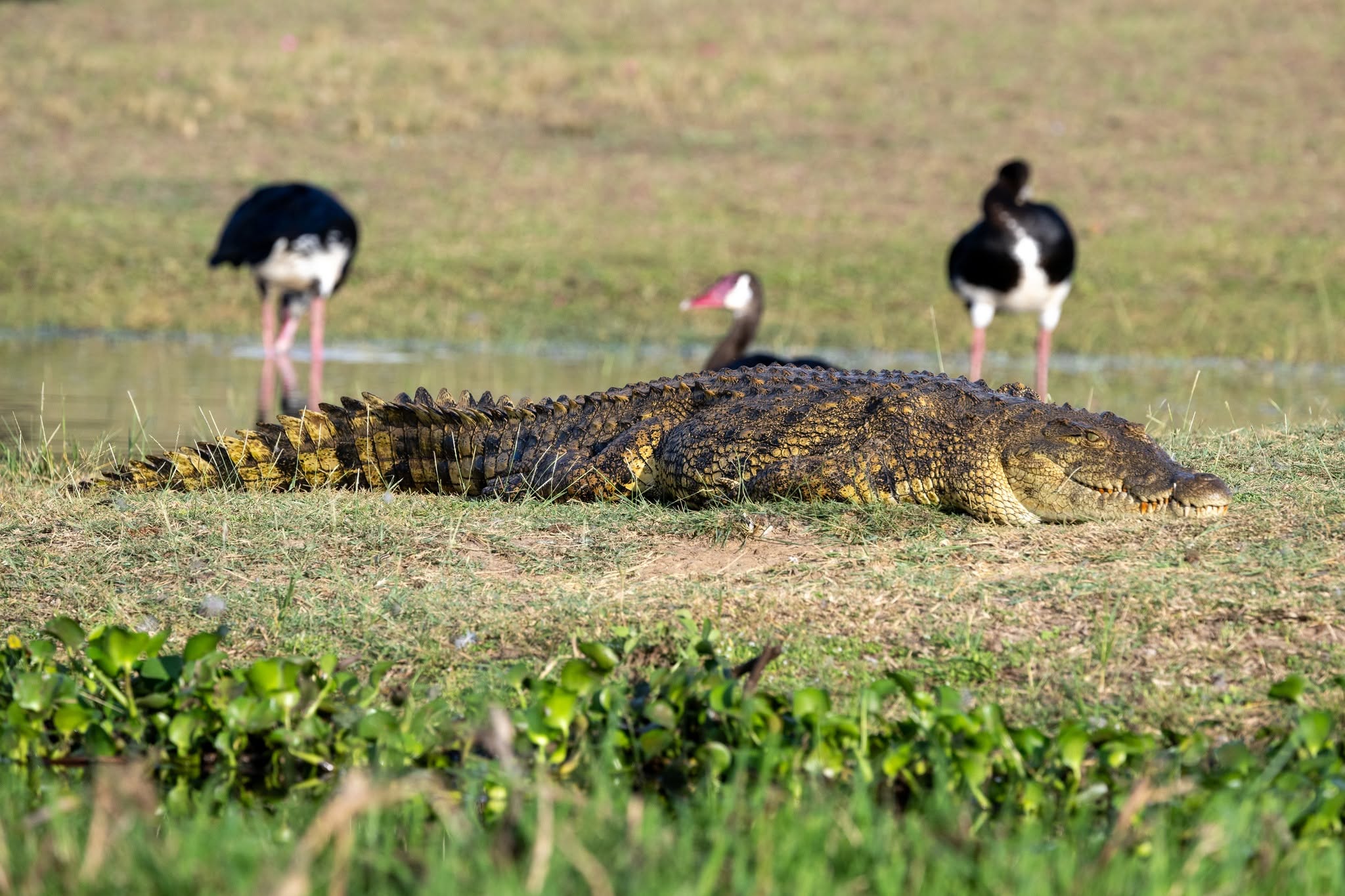
Giraffes, zebras, hippos (hundreds along Lake Ihema — one of Africa’s densest populations), Nile crocodiles, topi, roan antelope, waterbuck, impala, warthog, olive baboon, sitatunga in papyrus swamps, serval cats, and African wild cats.
Bird watching 2026
Over 525 species confirmed — Akagera is a world-class birding destination. The shoebill stork is the most sought-after sighting, found in the papyrus swamps. African fish eagles, papyrus gonolek, malachite kingfisher, grey crowned crane, and numerous raptors are reliably seen along Lake Ihema.
3. Self-Drive Rules and Park Access in 2026
Self-drive is fully permitted in Akagera in 2026. You explore independently on all marked game drive tracks without any mandatory guide requirement.
✅ Permitted for self-drive visitors:
- Driving on all marked game tracks in the park
- Entering independently through the south gate (Mutumba Gate)
- Stopping anywhere on marked tracks for wildlife viewing
- Overnight stays at gazetted campsites with your own vehicle
- Booking optional night game drives through your lodge or at the gate
❌ Not permitted:
- Driving off marked tracks at any time
- Exiting your vehicle except at designated picnic sites and viewpoints
- Remaining in the park after 6:00pm without an official night drive booking
- Exceeding 40 km/h on park tracks
Park access in 2026:
The official self-drive entrance in 2026 is the Mutumba Gate (south gate). The north gate access for self-drive vehicles is through the full circuit only — enter south, exit north or vice versa. Check current gate access on the Akagera website before your visit as this has changed recently.
2026 guide tip: An optional park guide hired at the gate (~$30–50 for a half-day) uses radio networks to track the exact locations of lions and rhinos reported by rangers across the park. With 100+ rhinos and 50+ lions in Akagera in 2026, a guide’s real-time intelligence is genuinely transformative for sighting rates. Even experienced self-drivers recommend hiring one for the first visit or for the northern sector.
4. Best Car Hire for Akagera in 2026
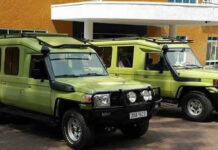
Safari Land Cruiser with Pop-Up Roof | From $80/day ⭐ Best for Akagera 2026
The ultimate Akagera vehicle in 2026. The fully open pop-up roof allows passengers to stand for unobstructed 360° wildlife viewing — scanning Mutumba Hills ridgelines for lions, watching rhinos across open grassland, standing for the perfect photography angle. This is the vehicle configuration used by professional East African safari operators and it genuinely transforms game viewing in Akagera’s open savannah terrain.
Also available with a rooftop tent for camping inside the park at Mutumba Hills campsite.
Toyota Land Cruiser Prado | From $90/day
The most capable and comfortable all-season Akagera vehicle. Full-time 4WD with low-range handles the northern sector’s steep laterite ridges in all conditions. If you are not doing specialist wildlife photography but want to experience the full north-to-south Akagera circuit confidently in any season, the Prado is the right choice.
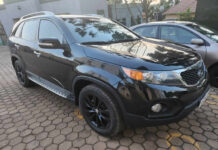
Toyota RAV4 | From $45/day (dry season, central/southern zones only)
Handles Akagera’s central and southern game drive tracks in dry season. Not recommended for the northern sector or rainy season. In 2026, with increased visitor interest in the northern rhino and lion zones following the translocation, we strongly recommend upgrading to the Prado for a complete Akagera experience.
2026 specific advice: With the surge in visitors specifically targeting the new white rhino population in the northern sector, the Prado or Safari Land Cruiser is more important than ever for a complete Akagera 2026 experience. The northern sector tracks are demanding — the RAV4’s limitations on these tracks mean potentially missing the park’s biggest 2026 attraction.
5. Road Conditions and Zones Explained
Understanding Akagera’s internal road zones is essential for self-drive planning in 2026:
Southern Zone — Lake Ihema area
Good gravel and dirt tracks. Most accessible zone. Suitable for RAV4 in dry season. Best for hippos, crocodiles, elephants, and the Lake Ihema boat cruise departure point. The Ruzizi Tented Lodge is located in this zone.
Central Zone — Open savannah
Wide tracks through rolling grassland. Giraffes, zebras, topi, buffalo, and impala commonly seen throughout the day. Generally manageable in dry season with a RAV4, though the Prado is more comfortable on the rougher sections.
Northern Zone — Mutumba Hills ⭐ 2026 priority zone
The most rewarding and most challenging zone in 2026. Narrow laterite tracks climb steep rocky ridges with loose surfaces and ruts after rain. The Land Cruiser Prado or Safari Land Cruiser is essential here in all seasons. This is where lions are most reliably found and where the new white rhino population is establishing its range.
2026 seasonal road conditions: Akagera National Park 2026
| Season | Southern/Central zones | Northern zone | Recommended vehicle |
|---|---|---|---|
| Jun–Sep (dry) | Excellent | Good — manageable | Prado or RAV4 for south, Prado for north |
| Dec–Feb (dry) | Excellent | Good | Same as above |
| Mar–May (rains) | Manageable with care | Challenging — steep muddy tracks | Prado or Safari LC throughout |
| Oct–Nov (rains) | Manageable | Difficult — some tracks may close | Prado or Safari LC throughout |
6. Best Game Drive Routes and Timing in 2026
Best time of day:
- 6:00–9:00am ⭐ Best — lions active after night hunting, cool temps, golden photography light
- 3:30–6:00pm ⭐ Excellent — animals emerge from midday shade, hippos at lake edges
- 6:30am (official gate opening) — aim to be at the gate as it opens for maximum game viewing time
Top game drive routes for 2026:
Southern Lake Circuit (half day — 3–4 hours) Gate → Lake Ihema hippo pools → boat cruise departure point → picnic site → return. Best for first-time Akagera visitors. Elephants, hippos, crocodiles, waterbirds, and exceptional scenery along Lake Ihema.
Full North–South Circuit (full day — 7–8 hours) Gate → central savannah (giraffes, zebras, buffalo) → northern sector (Mutumba Hills — lions, rhinos) → north exit. The most complete Akagera experience in 2026. Allow a full day and bring lunch.
Rhino Tracking Drive (3–5 hours) Arrange through the gate or your lodge — a ranger accompanies you specifically to track rhinos using real-time radio reports from monitoring teams. With 100+ rhinos now in the park, success rates are at their highest ever in 2026. Cost: ~$45/person.
Night Game Drive (2–3 hours) Booked at the gate or through your lodge. The best opportunity for leopard, genet, civet, serval, porcupine, and aardvark sightings. Cost: ~$35/person plus a mandatory park guide.
7. Entry Fees and Activities Akagera National Park 2026
| Fee | 2026 Cost |
|---|---|
| Adult park entry (international) | ~$40 per person per day |
| Child entry (under 15) | ~$10 per child |
| Vehicle entry fee | ~$10–15 per vehicle |
| Optional park guide | ~$30–50 per half-day |
| Boat cruise — Lake Ihema | ~$35 per person |
| Rhino tracking drive | ~$45 per person |
| Night game drive | ~$35 per person |
| Fishing on Lake Ihema | ~$50 per rod |
| Campsite fee (Mutumba Hills) | ~$30–40 per person per night |
Payment: Park fees are paid at the gate in cash (USD preferred). There are no ATMs inside the park. Carry enough cash for your full stay before entering.
8. Where to Stay — Lodges and Camping in 2026
Lodges inside the park
Wilderness Magashi — Ultra-premium eco-lodge on the remote Lake Rwanyakazinga in the park’s northeast. Solar-powered, fully off-grid, all-inclusive with guided activities. One of East Africa’s finest safari lodges.
Ruzizi Tented Lodge — Eco-luxury tented camp on Lake Ihema’s shores. Central location for southern circuit game drives. Mid-to-high range. Boat cruises depart from in front of the lodge.
Karenge Bush Camp — Mid-range, recently renovated. The only property where guests can join rangers on the new white rhino morning monitoring trek in 2026. Excellent value for money.
Camping inside the park
Mutumba Hills Campsite ⭐ — The best camping in Rwanda. Northern sector hilltop with panoramic views over the savannah and towards Tanzania. Regular wildlife visits at night — elephants, hyenas, and occasionally lions pass through. Campsite fee: ~$30–40/person/night.
Southern Campsite — Near the park entrance. More accessible. Good for Lake Ihema bird watching at dawn from your tent.
Car Rentals Rwanda provides 4×4 vehicles with complete rooftop tent and camping gear packages — tent, mattress, bedding, cooking equipment, cool box, and chairs. The ultimate way to experience Akagera in 2026. Book a camping package →
9. Sample 2-Day Self-Drive Akagera Itinerary 2026
| Time | Activity |
|---|---|
| Day 1 | |
| 5:00am | Leave Kigali — fuel up completely in Kayonza |
| 6:00am | Enter through Mutumba Gate — start southern circuit |
| 6:00–9:30am | Game drive: Lake Ihema, hippo pools, elephants, birds |
| 9:30am | Lake Ihema boat cruise (book at gate on arrival) |
| 11:30am | Drive north through central savannah — giraffes, zebras, buffalo |
| 1:00pm | Picnic lunch at designated site |
| 2:00pm | Continue north — Mutumba Hills, lion and rhino territory |
| 4:00pm | Arrive Mutumba Hills campsite — set up rooftop tent |
| 5:30pm | Evening game drive — best lion activity window |
| Day 2 | |
| 6:00am | Dawn game drive from camp — prime lion and rhino hour |
| 8:30am | Rhino tracking drive with park ranger (~$45/person) |
| 10:30am | Breakfast at camp |
| 11:30am | Exit via north gate — drive back to Kigali |
| 2:00pm | Arrive Kigali |
10. Frequently Asked Questions
How many rhinos are in Akagera National Park in 2026? Over 100 — eastern black rhinos (established since 2017) plus 70 newly arrived southern white rhinos translocated from South Africa in June 2025. Akagera is now one of Africa’s most significant rhino conservation sites and 2026 is the best year ever to see them.
Is self-drive allowed in Akagera National Park in 2026? Yes — self-drive is fully permitted on all marked game drive tracks. No mandatory guide is required, though an optional park guide significantly improves sighting rates for lions and rhinos.
Do I need a 4×4 for Akagera in 2026? Yes — strongly recommended for the full experience. For the northern sector where lions and the new rhino population are concentrated, a Land Cruiser Prado or Safari Land Cruiser is essential. The RAV4 handles central tracks in dry season but has genuine limitations on northern zone terrain.
What is the drive time from Kigali to Akagera National Park? Approximately 2 to 2.5 hours (100 km) via Kayonza. Leave Kigali by 5:00am to enter at gate opening (approximately 6:00am).
Can I camp inside Akagera National Park in 2026? Yes — Akagera has gazetted campsites including the spectacular Mutumba Hills campsite in the northern sector. Car Rentals Rwanda provides 4×4 vehicles with full rooftop tent and camping gear.
How has the 2025 rhino translocation changed Akagera in 2026? With 70 additional white rhinos joining the existing black rhino population, Akagera now has over 100 rhinos in 2026 — dramatically improving sighting opportunities and making the park one of Africa’s premier rhino destinations.
Book Your Akagera Car Hire for 2026
📞 Call/WhatsApp: +250 788 552 939 🌐 Free quote: carrentalsrwanda.com/contact-us 🚙 2026 fleet: carrentalsrwanda.com/fleet 💰 2026 prices: carrentalsrwanda.com/car-rental-prices-rwanda
Related posts: