
Driving in Rwanda Rules (2026): Speed Cameras, Parking & Night Driving Tips | Car Rentals Rwanda
Driving in Rwanda rules is generally straightforward—roads between major towns are good, signage is clear, and traffic discipline is strong in many areas. The biggest “surprises” for visitors are usually strict speed enforcement (especially cameras), paid parking in Kigali, and the practical realities of night driving outside well-lit zones.
This guide from Car Rentals Rwanda covers the essential driving in Rwanda rules you should know before self-driving or using a rental car: speed cameras and speed limits, phone and seatbelt compliance, how parking works, what to carry, how to check/pay fines, and safe night-driving habits.
1) The non-negotiables: what Rwanda Police enforce most
If you want the easiest, stress-free driving experience in Rwanda, focus on these fundamentals:
- Respect posted speed limits (cameras are common and automated).
- Do not hold your phone while driving (hands-free use has been clarified as allowed; handheld use is treated as the violation).
- Seatbelts for all occupants are enforced (including passengers).
- Carry your driving licence and present it when requested by an authorized officer.
2) Speed limits in Rwanda: follow the signs first
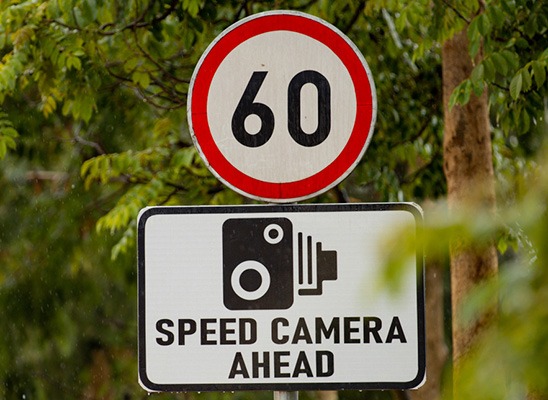
You’ll see common posted limits that often include 40 km/h, 60 km/h, and 80 km/h, and the correct rule is always: the sign on the road is the law.
Rwanda National Police has also publicly explained that speed enforcement cameras are set relative to posted limits (examples include 40/60/80 zones).
Practical tip (Car Rentals Rwanda)
When entering towns, markets, schools, or dense pedestrian areas, slow down early. Speed limits can drop quickly, and cameras are positioned after speed-limit signs.
3) Speed cameras in Rwanda: how they work (and why drivers get tickets)
Rwanda National Police confirms there are static and mobile speed enforcement cameras. They are typically placed some metres after the speed-limit sign.
Police also explained a 10% tolerance margin applied by cameras (e.g., 40 set at 44; 60 set at 66; 80 set at 88). This margin exists to help drivers stabilize speed safely—but it should never be treated as a target.
Best habits to avoid speeding tickets
- Drive for the posted sign, not for the speed of surrounding traffic.
- Reduce speed before passing the speed-limit sign.
- Add extra travel time so you’re not tempted to rush.
- Assume cameras can operate in many zones (Kigali and major roads are actively monitored).
4) Phone use while driving: what’s allowed vs not allowed
Recent official clarification reported by Rwanda media: the violation is using a phone while holding it (handheld); hands-free systems (Bluetooth, mounted phones) were described as not punishable under the clarified interpretation.
Separately, Rwanda National Police has emphasized that phone distraction is a major road-safety problem and has run campaigns against phone use while driving.
Safe rule (recommended)
Even if hands-free is allowed, the safest option is:
- Use voice guidance, keep calls short, and if you need to type or search, pull over safely first.
5) Seatbelts: everyone, every time
Rwanda Police has explicitly highlighted seatbelt enforcement and fines for not wearing one.
For rental cars, ensure every passenger has a working belt before departing—especially for family trips.
6) Parking in Kigali: paid zones and how to avoid problems
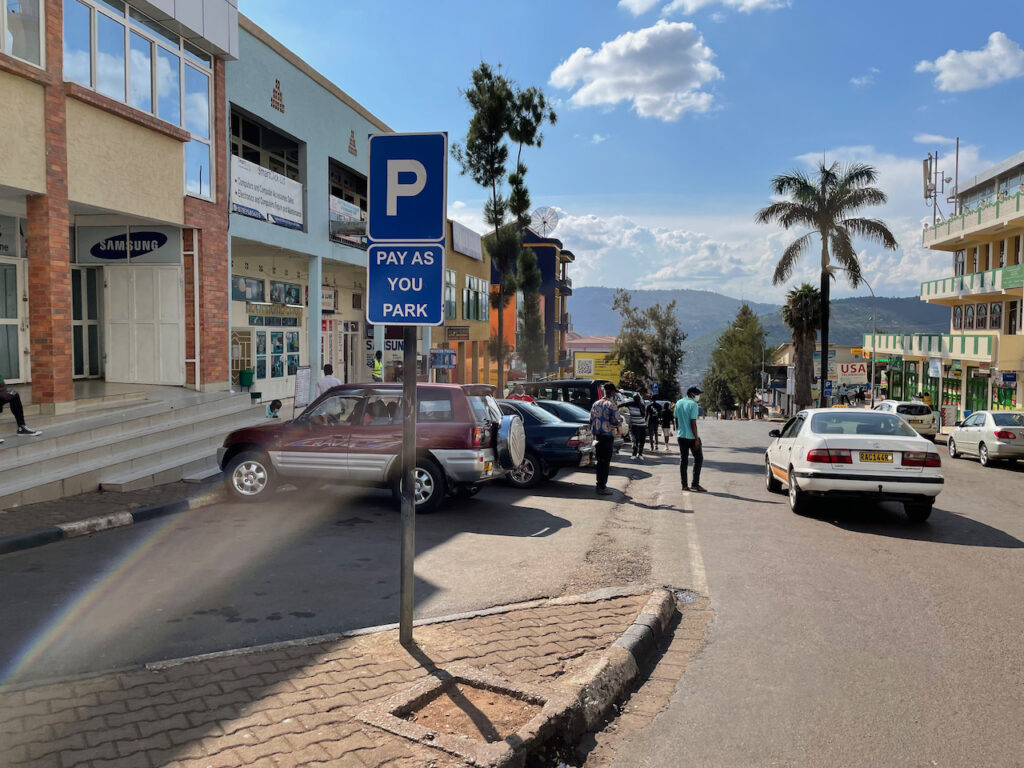
If you’re driving in Kigali, assume parking is paid in designated areas unless clearly stated otherwise. Rwanda Revenue Authority explains that parking fees are charged in parking lots determined by decentralized entities, and tariffs can be hourly/daily/monthly depending on vehicle category.
Kigali parking tips that prevent fines/towing
- Park only in marked, designated areas.
- Follow the instructions displayed in that parking zone (payment method can vary by location).
- If an attendant is present, follow their guidance and keep proof of payment until you leave.
7) Documents to carry when driving in Rwanda
At minimum, carry:
- Your driving licence (you must hold and carry it and present it when required).
- Your passport/ID (especially if you’re a visitor, for identification).
Foreign licences and IDP (important for tourists)
Travel advisories commonly state that an International Driving Permit (IDP) may be required alongside your home licence. For example, U.S. travel guidance states an IDP and third-party insurance are required.
Australia’s travel advisory similarly states you’ll need your domestic licence and an IDP.
If you’re a resident (not just visiting), Rwanda National Police notes you can drive on a foreign licence for 12 months, after which you must apply for a Rwanda licence.
Car Rentals Rwanda tip: If your licence is not in English or French, bring an IDP or an official translation to avoid delays at checkpoints or during rental verification.
8) Night driving in Rwanda: smart safety tips
Night driving can be fine in Kigali and well-lit main routes, but it requires extra caution. U.S. travel guidance flags road risks including dim or unused headlights and poor vehicle maintenance among general hazards.
Night driving tips that reduce risk
- Prefer daytime transfers for long routes (especially to parks or rural areas).
- If you must drive at night: slow down, increase following distance, and avoid overtaking unless clearly safe.
- Watch for pedestrians, cyclists, and motos—visibility is lower and reaction time matters more.
- Keep your fuel above half when leaving major towns (less stress if delays happen).
9) Traffic fines: how to check and pay
Rwanda National Police explains there are electronic tickets and camera-detected tickets.
You can check fines via the official Police fines portal.
For payment workflows, Irembo’s support documentation provides instructions for checking and paying traffic fines.
Car Rentals Rwanda tip: If you’re renting, ask the rental company’s process for handling camera tickets during your rental period—this prevents surprises at return time.
Quick checklist before you start your self-drive day: Driving in Rwanda rules
- ✅ Licence + IDP (recommended) + passport/ID
- ✅ Seatbelts working for all passengers
- ✅ Know your route + estimated travel time buffer
- ✅ Drive by posted signs (especially 40/60/80 zones)
- ✅ Phone mounted / hands-free only; pull over to type
- ✅ Plan parking payment in Kigali
FAQs: Driving in Rwanda Rules
Are speed cameras common in Rwanda?
Yes. Rwanda National Police describes both static and mobile speed enforcement cameras used to monitor compliance.
Is there a “10% buffer” on cameras?
Police have stated a 10% tolerance is applied on camera trigger settings (examples given for 40/60/80 zones). You should still drive to the posted limit.
Is phone use allowed while driving?
Recent clarification reported in Rwanda media says the offence is handheld phone use; hands-free use was described as allowed under that clarified interpretation.
Do passengers need seatbelts in Rwanda?
Yes—Rwanda Police has highlighted enforcement and fines for not wearing seatbelts.
Is parking free in Kigali?
Many areas require paid parking. Rwanda Revenue Authority explains parking fees are charged in parking areas determined by decentralized entities.
How do I check traffic fines?
Police provides an official fines portal, and Irembo provides instructions for checking/paying traffic fines.





: speed limits and speed cameras, parking in Kigali, phone/seatbelt laws, night driving safety, and fines)